Places per hour
The number the practice actually runs on. Equipment that improves one patient's session but reduces places per hour has to earn that trade deliberately.
What a practice can treat in a day is set by rooms, places and the time between them, not by how long the equipment list is. We start from the throughput you need and the space you have, and then source against it.
A room that takes one patient at a time and a room that takes three have the same floor area very often, and completely different economics. What separates them is layout, storage and how much of the session needs a therapist standing next to the patient. Working that out first changes the equipment list substantially, and almost always in the direction of fewer, more flexible pieces.
The number the practice actually runs on. Equipment that improves one patient's session but reduces places per hour has to earn that trade deliberately.
Space where patients work with supervision rather than one to one is usually the part of a practice with the most room to grow.
Surfaces, upholstery and anything with a fabric join get cleaned between patients. What is easy to clean is a purchasing criterion, not a detail.
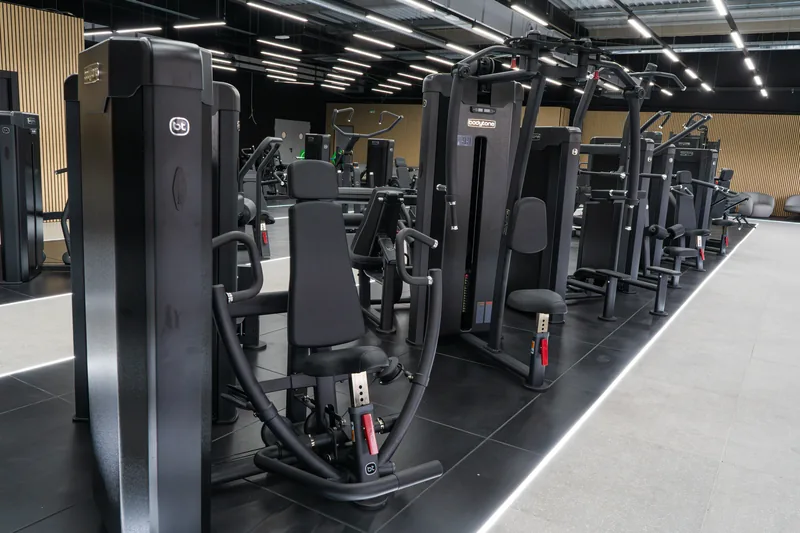
The parts a practice is assembled from. Which ones you need depends on what you treat and how you are reimbursed:
| Element | What it decides |
|---|---|
| Treatment rooms and couches | Places, privacy and how quickly a room turns around between patients. |
| Active exercise area | Where supervised group or circuit work happens. Usually the part with the most capacity per square metre. |
| Strength equipment for therapy use | Adjustable resistance in small increments and a range that starts low enough to be useful on day one of a recovery. |
| Low-impact cardio | Equipment that loads the system without loading the joint. Chosen for the range of entry levels it covers. |
| Accessibility | Door widths, transfer space, floor surfaces and step-free routes. Decided by the building and the applicable requirements, not by the equipment. |
| Hygiene and cleaning | Wipeable surfaces, removable covers and finishes that survive frequent disinfection. |
| Documentation and software | Scheduling, treatment records and billing. The practice's own data protection obligations govern what may be stored and where. |
| Storage | Small equipment out of the treatment area, so a room resets in seconds rather than minutes. |
| Maintenance | Service intervals and parts, because a piece out of action in a practice is a cancelled appointment. |
What a given practice needs follows from its treatments, its reimbursement situation and the room it has. We work it through with you against the plan, and the clinical decisions stay yours.
Most practices are limited by therapist hours rather than by floor area, which makes supervised active work the part worth planning carefully: several patients training in the same space with one therapist present covers hours that one-to-one treatment cannot. What makes it work is equipment with a wide enough range to serve very different stages of recovery, laid out so the therapist can see everyone. Whether that model fits your practice, and how it is reimbursed, is your decision and your payer's, the layout and the equipment are ours to get right.
What a practice must provide, which treatments may be delivered and how they are reimbursed are matters for the professional body, the regulator and the payer in your country, not for us, and the answers differ enough that guessing would be worse than useless. One question we can help with is classification: some equipment is a medical device and some is training equipment, and which it is affects documentation, liability and sometimes reimbursement. Ask every supplier for the classification in writing, and we will make sure it is in the quote.
We do the procurement, not the therapy. You decide what the practice treats and how; we work out what the room needs to support it and find the suppliers.
Send the plan, what you treat and how many places you need per hour. You get a layout read and a written quote.